Quick Answer:
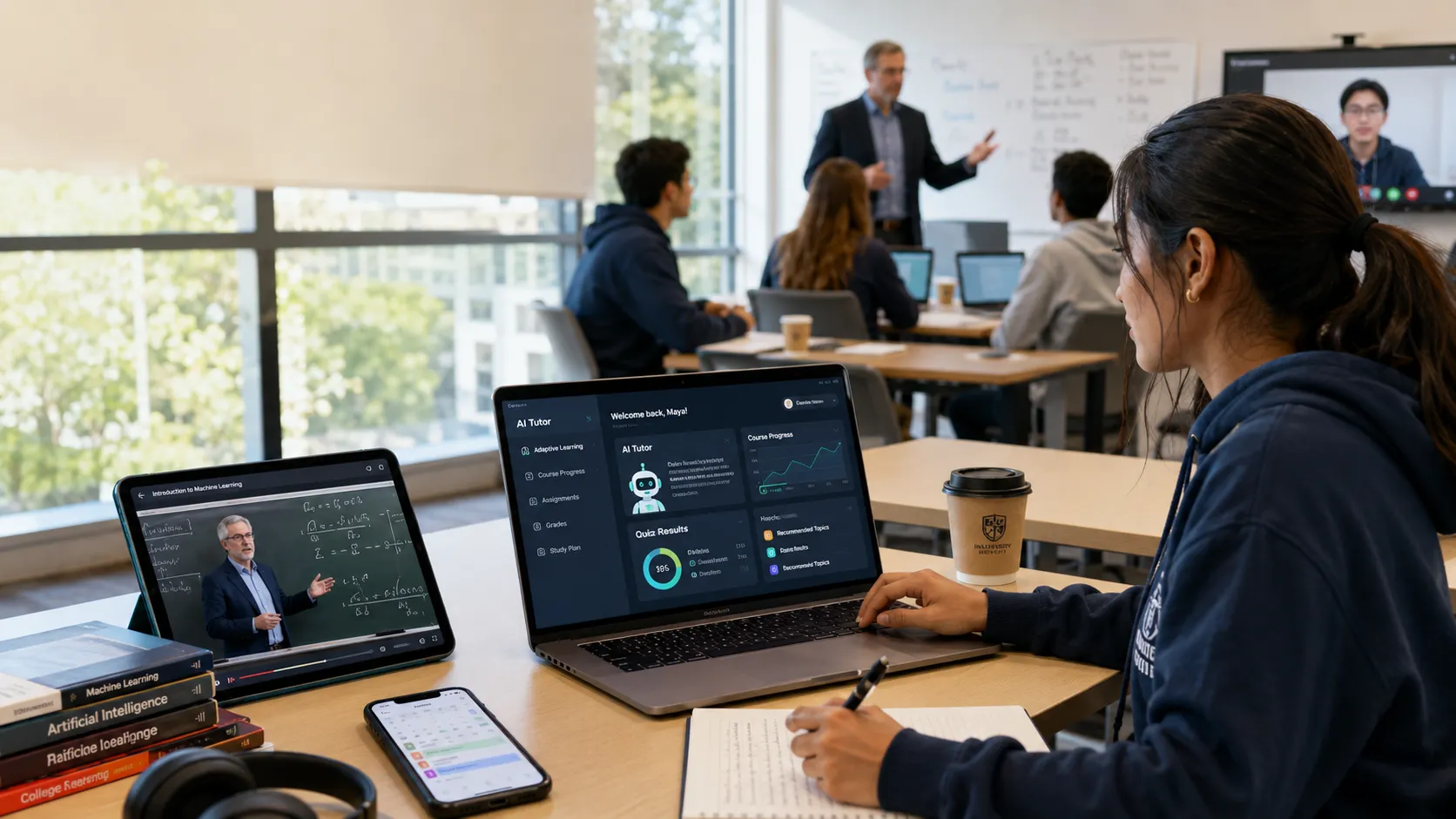
In 2026, educational technology has moved learning from a passive, location-bound experience to a personalized, data-driven one. AI-powered platforms provide on-demand tutoring and adaptive assessments. Hybrid models blend asynchronous online content with in-person application. Academic administration — grade tracking, citations, scheduling — is now largely automated. Students who adopt these technologies gain a meaningful academic advantage; those who ignore them carry unnecessary friction into an already demanding environment.
Key Takeaways
- AI-powered adaptive learning platforms personalize study content based on individual performance data, filling specific knowledge gaps rather than reviewing everything uniformly.
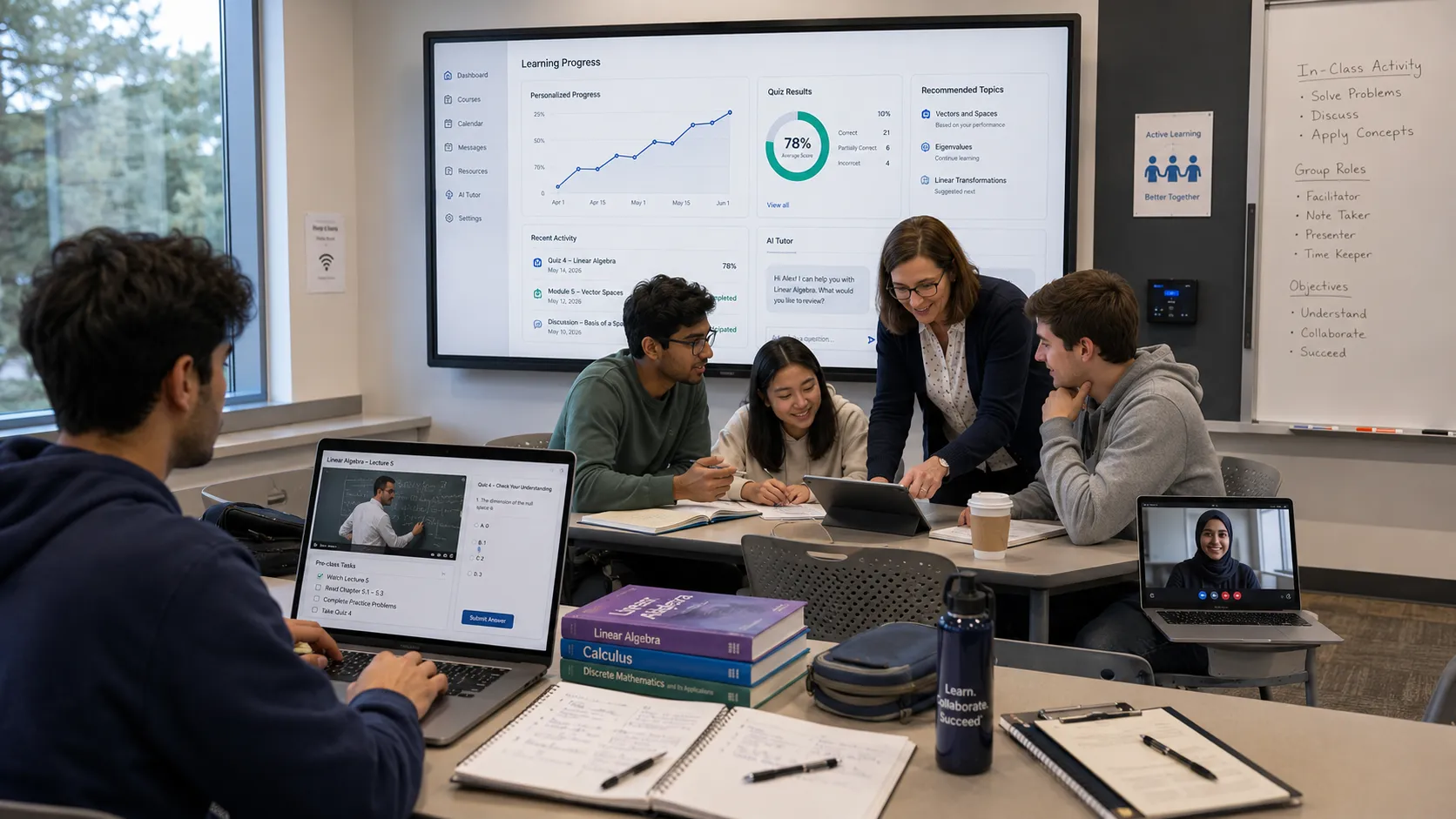
- The hybrid "flipped classroom" model is now the dominant format at most global universities — passive content consumption happens asynchronously; classroom time is reserved for application.
- Administrative academic work (grade calculation, citation formatting, deadline management) is now almost entirely automatable with free tools.
- The biggest risk of modern education is distraction: asynchronous learning requires a level of self-management that traditional lecture schedules never did.
- Digital literacy — the ability to navigate online learning environments, evaluate information sources, and use productivity tools effectively — is now a fundamental academic skill.
The Speed of Change in Higher Education
For most of recorded history, the model of university education was remarkably consistent: a professor lectures, students listen and take notes, students write papers and take exams, grades are assigned. The physical classroom was the irreplaceable center of the learning experience.
Within the span of a few years, that model has been fundamentally disrupted. The COVID-19 pandemic forced every institution to rapidly shift online, revealing simultaneously how adaptable universities could be and how much of the in-person lecture experience was replicable through digital tools. What followed was not a return to the pre-2020 model — it was an integration.
The institutions that emerged from that period strongest did not simply replace lectures with Zoom calls. They used the experience to redesign how learning happens, incorporating technology where it genuinely improves outcomes and reserving in-person time for the interactions that technology cannot replicate.
This guide explains what that redesign looks like in practice in 2026 — and what it means for how you should approach your own education. The shift is also documented at a global policy level: UNESCO's education division tracks how technology adoption is reshaping learning outcomes across countries, confirming this is not a regional trend but a global transformation.
1. AI-Powered Personalization: The End of One-Size-Fits-All Teaching
The Core Problem With Lectures at Scale
A professor delivering a lecture to 300 students faces an impossible challenge. Some students understood the concept in the first five minutes and are ready to move on. Others are still confused by a definition from ten minutes ago. The lecture proceeds at a fixed pace regardless, serving no individual student optimally.
Traditional education solved this with office hours — a limited, appointment-based system where students could seek individualized attention. The problem was access: office hours had fixed time slots, limited availability, and required students to overcome the social friction of approaching a professor to admit confusion. In practice, the students who most needed help often did not use office hours, and the students who did use them often did well already.
AI changes this access equation entirely.
Adaptive Learning Platforms
Modern university learning management systems increasingly incorporate adaptive algorithms. When you complete an online quiz and answer three questions about enzyme kinetics incorrectly, the system does not simply mark them wrong. It analyzes which specific aspect of the concept your incorrect answers reveal — did you misidentify the type of inhibition, or did you confuse the substrate with the product? — and generates targeted review materials for exactly that sub-concept.
This is not hypothetical. Platforms like Coursera, Khan Academy, and university-specific systems already use this logic at varying degrees of sophistication. As the underlying AI models improve, the gap between a well-calibrated adaptive learning platform and a skilled human tutor for content delivery is narrowing.
AI Tutoring: 24/7 Academic Support
AI-powered tutoring tools (including general-purpose AI assistants adapted for educational use) can explain concepts, generate practice problems, check reasoning, and provide feedback on draft essays at any hour. This democratizes access to the kind of personalized academic support that was previously only available to students who could afford private tutoring.
The important caveat: AI tutoring tools are most effective as supplements to human instruction, not replacements. They cannot fully replace the judgment of a domain expert professor, the accountability of a structured seminar, or the social learning that happens in genuine peer discussion. They fill the gap between those human touchpoints — making the hours between scheduled instruction far more productive.
2. Hybrid Learning: The Permanent New Standard
What the Shift Revealed
The period of forced online learning clarified two things simultaneously. First, the pure transmission of information — a professor reading slides, explaining definitions, walking through standard examples — is entirely replicable through video and does not require physical presence. Second, the highest-value components of in-person education — collaborative problem-solving, real-time debate, hands-on experimentation, the social dimension of academic community — cannot be adequately replicated online.
The logical response was to reorganize education around this insight: move information delivery online, reserve physical classroom time for what cannot be done remotely.
The Flipped Classroom Model
The flipped classroom is now the dominant format at many research universities globally. In this model:
Asynchronous (done independently):
- Pre-recorded lecture videos (typically 15 to 25 minutes per topic, not 90-minute monologues)
- Required readings and primary sources
- Introductory quizzes to confirm basic comprehension before class
Synchronous in-person time:
- Problem-solving workshops where students apply concepts in small groups
- Structured debates and seminar discussions
- Lab experiments and hands-on projects
- Direct Q&A with the professor focused on genuine conceptual difficulties, not basic definitions
The result is that the professor's in-person time — the rarest and most expensive component of university education — is spent on the highest-value interactions rather than passive information delivery.
Managing Asynchronous Workload
The flexibility of asynchronous content is real. Watching lecture videos at a pace that suits you, pausing to take notes, rewinding confusing sections — these are genuine advantages over fixed-speed live lectures.
But flexibility creates its own challenges. Without a fixed lecture time anchoring your schedule, the temptation to defer asynchronous content is constant. Students who successfully navigate hybrid learning build deliberate structures around their asynchronous work:
- Treating online lecture viewing as a fixed daily appointment on their calendar, not something to do "when they have time"
- Completing pre-class quizzes immediately after watching lecture videos, while the content is fresh
- Taking notes during video lectures as if attending a live class, not as passive background viewing
3. The Automation of Academic Administration
What Has Been Eliminated
The administrative burden of being a student used to be significant. Calculating your GPA across multiple semester weights required either complex spreadsheet formulas or careful manual arithmetic. Formatting a bibliography for a research paper in APA 7th edition required reading a detailed style guide and manually constructing every citation entry. Managing assignment deadlines across five courses required a physical planner and constant vigilance.
In 2026, each of these tasks has a free digital solution that handles the complexity automatically.
Grade Tracking and GPA Calculation
Our free CGPA Calculator aggregates any number of semesters — each with different credit loads and SGPA values — into an accurate cumulative average in seconds. For students whose university uses percentage grading, our Percentage to GPA Converter provides an accurate conversion to the 4.0 scale for international applications.
Both tools process data entirely within your browser. No account required, no data transmitted to servers. Your academic records stay private.
Citation and Research Management
Zotero (free) and similar reference managers eliminate the manual bibliography entirely. A browser extension saves any academic source with one click. In Microsoft Word or Google Docs, one-click in-text citation insertion and automatic bibliography generation in any required style take seconds. For a student writing four research papers per semester, this saves ten or more hours of mechanical formatting work.
Deadline and Project Management
Notion, Trello, and Google Calendar — all free — transform a chaotic mental todo list into a structured, searchable, shareable system. Loading all course deadlines into a master calendar during week one gives you a semester-level view of your workload and eliminates late submissions caused by forgotten deadlines.
4. Digital Self-Management: The New Core Competency
The Hidden Cost of Flexible Learning
Every advantage that technology brings to modern education comes paired with a responsibility shift. The flexible schedule of asynchronous learning means the burden of showing up is on you. The availability of entertainment on the same device you use to study creates constant competition for your attention. The reduction of mandatory in-person commitments removes the external structure that many students depended on to maintain academic discipline.
Research consistently shows that the students who thrive in hybrid and online learning environments are not necessarily the most intelligent. They are the students who have internalized strong self-management habits.
The Practical Skills of Digital Self-Management
Time-blocking asynchronous work: Scheduling specific daily time blocks for online lecture viewing and asynchronous assignments, and treating those blocks as non-negotiable appointments.
Digital distraction control: Using website blockers (Cold Turkey, Freedom) during study blocks to prevent the automatic drift to social media that online studying enables.
Active note-taking during videos: Taking structured notes during pre-recorded lectures rather than watching passively. This forces engagement and improves retention, converting a passive viewing experience into active learning.
Regular academic check-ins: Reviewing your grade tracker and CGPA estimate weekly to maintain awareness of your academic position. Students who check their academic standing weekly are far less likely to experience end-of-semester grade surprises.
The Social Challenge of Hybrid Learning
One underappreciated consequence of the shift to hybrid and online learning is reduced spontaneous social interaction. In a traditional university, you encountered peers constantly — in hallways, in cafeterias, in lectures. These casual encounters formed the basis of study groups, academic friendships, and the informal support networks that help students navigate difficult coursework.
In a hybrid model, intentionally building these connections requires deliberate effort:
- Participating actively in online discussion forums and course chat channels
- Joining student organizations in your department to maintain regular academic peer contact
- Organizing or joining study groups for challenging courses, using video calls when in-person meetups are not feasible
5. What This Means for Your Degree
EdTech Advantages Are Cumulative
Students who begin using academic tracking tools, adaptive learning resources, and organized digital workflows in their first semester compound these habits across four years. The 0.2 GPA improvement that comes from consistent grade tracking in year one creates measurably different options by graduation.
The students who defer building these habits — waiting until year three to start tracking grades or year two to learn how to use Zotero — pay the compounding cost in wasted time and poorer academic outcomes during the period when early leverage is highest.
Technology Does Not Replace Effort
The most important clarification: EdTech accelerates productive effort — it does not replace it. AI tutors cannot understand complex concepts for you. Adaptive platforms cannot retain information on your behalf. Grade calculators are only valuable if you act on the data they provide.
Technology tools in education are leverage. Leverage amplifies what you put in. Students who work hard and use these tools graduate with stronger records than students who work equally hard without them. But no amount of technology substitutes for the foundational work of reading, thinking, practicing, and remembering.
Frequently Asked Questions (FAQ)
Will AI eventually replace university professors?
No. AI is highly effective at information delivery, basic feedback, and practice problem generation. It cannot replicate the critical mentorship dimension of great professorship — the ability to recognize a student's specific misconception and address it with the right analogy, the authority that comes from genuine domain expertise, or the social development that happens in rigorous academic debate. Professors are evolving from "lecturers" to "learning facilitators," which is a more valuable role, not a diminished one.
How do I stay disciplined with asynchronous online course content?
Treat your asynchronous lecture slots like fixed appointments. Block specific times in your calendar for watching lecture videos each week and do not move them. Study in a location associated with focused work (library, study room), not in your bedroom where leisure associations compete. Turn off your phone and use a website blocker during the scheduled viewing time.
Are online degrees from accredited universities equally valued by employers?
For most roles, yes — provided the institution is fully accredited. Employer attitudes toward online degrees have shifted significantly since 2020. What matters to most hiring managers is the institution's reputation, your GPA, the relevance of your coursework, and your portfolio of skills — not whether the delivery modality was in-person or hybrid.
How is AI changing university assessment?
Universities are actively redesigning assessments to be AI-resistant: moving toward oral examinations, open-book problem-solving sessions, project portfolios, and in-class timed assessments rather than take-home essay submissions. The skills that AI cannot replicate — real-time problem-solving, verbal explanation of reasoning, hands-on practical work — are becoming more central to how students are evaluated.
Summary
The student experience in 2026 is more flexible, more personalized, and more technology-dependent than any previous generation of higher education. AI tools provide on-demand support between human touchpoints. Hybrid models reorganize the classroom around high-value collaboration. Free digital tools eliminate the administrative friction that used to consume significant student time.
The students who extract the most value from this environment are not passive recipients of these tools — they are active, disciplined managers of their own learning. They use grade tracking tools proactively, engage with adaptive learning platforms strategically, and protect their study time from the digital distractions that now compete for attention on the same devices they use to learn.
To start building the digital foundation for your academic success, use our CGPA Calculator to understand exactly where you stand today, and read our guide on the Best Free Academic Tools for Students to build the toolkit that will carry you through your degree.